
Modular granny flats
Many families are turning to modular granny flats as a way to bring two generations together on the same property while still preserving privacy and independence. For some, it means keeping parents nearby in a home of their own. For others, it gives adult children a way to enter the housing market sooner while staying connected to family land, support and lifestyle.
A granny flat is not a small add-on. When designed well, it becomes a second fully functioning home that allows family to live together without living on top of one another.
Granny flats in Queensland can be built as permanent secondary dwellings on residential or rural land, provided the zoning allows it and council setbacks and approval conditions are met.
What is considered a granny flat in Queensland?
In Queensland, a granny flat is classed as a secondary dwelling. It is a self-contained home on the same lot as a primary residence, with its own kitchen, bathroom and living space. It must remain connected to the main household in terms of ownership and cannot be subdivided as a separate title.
This is very different from a transportable cabin or caravan. A modular granny flat is a permanent dwelling built to the same standards as a full-sized home.
How much does a modular granny flat cost?
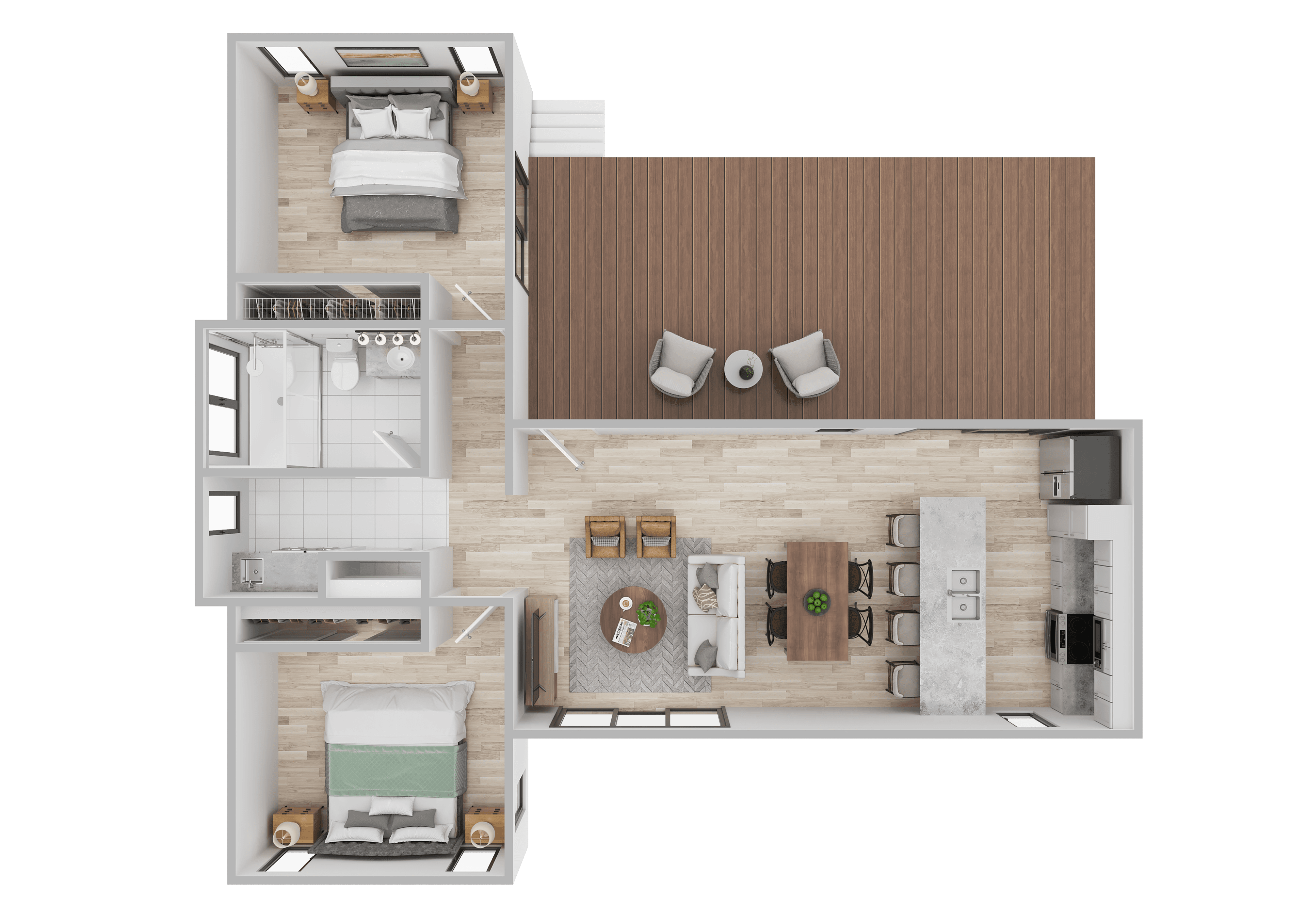
The cost depends on size, specifications and site conditions, but most families start by comparing one and two bedroom floorplans. The home itself is only part of the total cost, as site preparation and delivery influence final pricing.
If you are still exploring the budget side of things, you can download our price guide, which outlines entry-level pricing for different home sizes in Queensland.
Granny Flat approvals in Queensland
Because granny flats are permanent dwellings, they require the same type of building approval as a standard home. Zoning and setbacks will determine where the home can sit on the property.
Design considerations that improve liveability
A granny flat works best when it feels like a complete home, not an extension or an overflow space. Some of the most important design choices are simple but meaningful:
- A separate entry for privacy and dignity
- Good orientation for breezes and natural light
- Enough indoor storage for real daily living
- A small deck or verandah to create a sense of address
- Acoustic separation from the main home
- Universal access options that make ageing-in-place practical
Lifestyle benefits beyond space
Families are choosing granny flats for reasons that are both financial and emotional:
- Keeps support networks close
- Reduces housing pressure for younger generations
- Allows parents to downsize without leaving the family property
- Future-proofs the home as needs change over time
- Creates flexibility without losing privacy
Some owners also choose to lease the dwelling later in life or once circumstances change, which can provide a second household income if permitted by local rules.
How to take the next step
If you are comparing ideas or still working out whether a granny flat is achievable on your property, the next step is usually to understand where it can sit on your block.
This is where a concept site plan becomes helpful, it turns a general idea into a layout that reflects your land, setbacks and orientation.